Monday, January 21, 2013

New York Giants

Hooray! After moving 11 months ago, I finally found my football card binders last weekend. Now I can put my '68 Browns' cards away (instead of gathering dust in the "already scanned' pile), and restart these football blogs.


After finishing 9-5 in 1970, the Giants slumped to 4-10 in 1971, signaling the end of quarterback Fran Tarkenton's 5-year stay in New York. The Giants rebounded to 8-6 in 1972, but the '70 and '72 seasons were the team's only winning seasons from 1964-1980.


After 3 seasons (1961-63) as the Redskins' starting QB, followed by 7 seasons as the Eagles' starter, Norm Snead spent the 1971 season as a backup for the Vikings. Before the 1972 season, Snead and Fran Tarkenton switched teams, and Stormin' Norman regained a starting QB job for '72 and most of '73. He began 1974 with the Giants, then backed up in San Francisco for a season and a half, before returning to the Giants for his final season (1976).


Randy Johnson was the Falcon's #1 pick in 1966, and was their starting QB for the franchise's first 2 seasons. After 3 more seasons in Atlanta as the backup, he played for the Giants from 1971-73 behind Tarkenton, then Snead. Randy played for the WFL's Hawaiians in 1974, then played 1 season each for the Redskins and Packers. He passed away in 2009 at age 65.


Ron Johnson was the Browns' #1 pick in 1969, A year later he was playing halfback for the Giants, leading the team with 1027 rushing yards. After missing most of the 1971 season, he returned in 1972, tallying 1182 yards. After rushing for 902 yards in 1973, Johnson had two off-years for the Giants before retiring.


Bobby Duhon was the Giants' 3rd-round pick in 1968, and the team's starting fullback as a rookie. After missing the 1969 season, he played 3 more seasons, mostly as a punt returner, although in 1971 he filled in for Ron Johnson as the starting halfback.


Bob Grim was a punt returner and wide receiver for the Vikings from 1967-71, then came to the Giants in the Tarkenton trade. After a season as the punt returner and #3 WR, Grim was a starting end during 1973-74. He played for the Bears in '75, followed by 2 seasons back in Minnesota.


An undrafted free agent, Bob Tucker was the Giants' starting tight end from his rookie season in 1970 through the 1976 season, usually grabbing more receptions than any of the wideouts. He split the '77 season between the Giants and Vikings, then played 3 more seasons as the Vikes' starting TE.


Pete Gogolak was the first soccer-style kicker in pro football, joining the Buffalo Bills in 1964 out of Cornell University. After 2 seasons, he became a free agent, since he had accepted a pay cut in 1965. The Giants threw a lot of money his way after enduring a bad kicker in '65, which further aggravated the NFL-AFL relationship (and hastened the merger). Pete kicked for the Giants through the 1974 season. His younger brother Charlie kicked for the Redskins and Patriots.


Jim Kanicki was the Browns' #2 pick in the 1963 draft, and played 7 seasons there (the middle 5 as the starting right defensive tackle). He was a starting defensive tackle for the Giants in 1970 and 1971, but was out of football by 1972.


Here we see Ronnie Hornsby in his college all-star game jersey (as is Lyle Alzado, John Brockington, and others in this set). Hornsby had a brief NFL career (1971-74, all with the Giants), and was the team's starting MLB only in 1972. He had 1 career interception.


Pete Athas was drafted by the Cowboys in 1970, but did not play that season. He joined the Giants in 1971, and played in New York for 4 seasons, the last 3 as the team's starting left cornerback and punt returner. He played for the Browns and Vikings in 1975, before finishing his career in 1976 with the Saints.


Carl "Spider" Lockhart was drafted by the Giants in the 13th round in 1965, and played 11 seasons (all as a Giants' starter). He was the team's starting left corner for his first two seasons, before switching to free safety. He also returned punts (mostly from 1966-71), and was the Giants' backup punter in '65, '66, and '68 (behind HB/P Ernie Koy).


Also check out the 1967 Giants.

.

Friday, May 27, 2011

Kansas City Chiefs

I'm back, and with the 1972 Chiefs in tow.

The Chiefs had just come off a 1971 season where they finished at 10-3-1, good for 1st place in the AFC West. They lost in the 1st round to the Dolphins, the eventual AFC champions. 1972 saw the Chiefs slide to an 8-6 record, finishing 2nd to the Raiders.


Len Dawson is back for his 11th season as the starting QB. This is the last season he would start more than 8 games. Dawson retired after the 1975 season, and would join the Hall of Fame in 1987.


Ed Podolak was drafted in 1969, and spent his entire 9-year career with the Chiefs. He was a starting running back from 1970 to 1975.


Otis Taylor was the Chiefs' 4th-round pick in 1965. (The Eagles also drafted him in the 15th round.) Otis was the Chiefs' primary wide receiver from 1966 to 1974, and retired after playing only 1 game in 1975. In 1971 he led the NFL with 1110 receiving yards.


Jim Tyrer was a 3rd-round pick for the Chiefs (Dallas Texans) in 1961, and held down their starting left offensive tackle job from 1962 to 1973. A 9-time Pro Bowler, he finished his career in 1974 with the Redskins.

Jan Stenerud joined the Chiefs in 1967, 1 year too late to play in Super Bowl I. He kicked for the Chiefs for 13 seasons, followed by 4 with the Packers (1980-83), and 2 with the Vikings. He was inducted into the Hall or Fame in 1991.


Buck Buchanan was the 1st overall draft pick in the 1963 AFL draft. This 6'-7", 270 lb mountain was a starting defensive tackle for the Chiefs for his entire 11-year career (1963-75). As a rookie he played on the left side, before switching to right tackle the next season. He was inducted into the Hall of Fame in 1990, after being a finalist 4 other times.

Willie Lanier played his entire 11-year career as a starting linebacker for the Chiefs. After playing the right side as a rookie, he moved to middle linebacker for the duration of his career. He was inducted into the Hall of Fame in 1986.


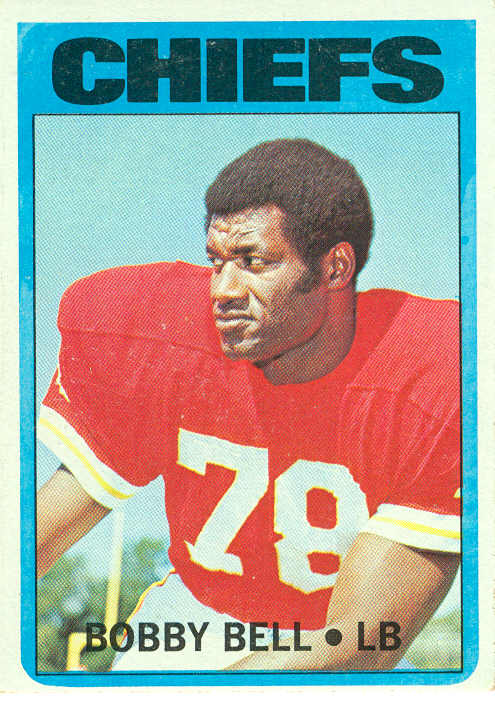
Like Lanier, Bobby Bell played his entire career as a starter for the Chiefs. Also like Lanier, Bell is a Hall of Famer, entering in 1983. Bobby was a 2nd-round pick in 1963, and spent his first 2 seasons at left defensive end, before moving to left linebacker.


Jim Marsalis was the Chiefs' #1 pick in 1969, and spent his first 4 seasons as their starting left cornerback. He also played for the Chiefs during 1973-75. After missing the 1976 season, he finished his career in 1977 with the Saints.


Emmitt Thomas is the 6th player in this review to have played his entire career for the Chiefs. He joined the team in 1966 and held down a starting cornerback job from 1968 until his retirement after the 1978 season, Thomas was inducted into the Hall of Fame in 2008.


Jerrel Wilson was drafted by the Chiefs in 1963, and spent the next 16 seasons as their punter. He led the league in punting yards in 1964 (3326) and 1973 (3642), and punted a 72-yarder as a rookie. Jerrel also launched 70-yard punts 2 other times in his career. He finished his career with the Patriots in 1978.


Also check out the 1968 and 1971 Chiefs.


Next time: St. Louis Cardinals
.

Thursday, September 30, 2010

Dallas Cowboys

Here are the 1972 Dallas Cowboys. In 1970, with QB Craig Morton at the helm, the Cowboys finished 10-4, won the NFC but lost Super Bowl V to the Colts. In 1971, they switched to QB Roger Staubach, went 11-3 and won Super Bowl V1. In 1972, they would drop to 10-4 (2nd place behind the Redskins) and lost the NFC Championship game to Washington. What happened in one year? It may have been the fact that QB Roger Staubach only played in 4 games, starting none.


#200 Roger Staubach - Staubach was drafted by Dallas in 1964. After fulfilling his Navy obligations, he joined the team in 1969 and backed up Craig Morton for 2 seasons. In his first season as a starter (1971), the Cowboys won the Super Bowl. After missing most of 1972, he returned to start every game from 1973-1979, and played in 3 more Super Bowls, winning Super Bowl XII. Staubach was a 6-time Pro Bowler and was inducted into the Hall of Fame in 1985.


#180 Duane Thomas - Duane Thomas was the Cowboys' #1 pick in the 1970 draft. A talented runner, he was also a problem for team management. After his rookie season, a contract dispute led the Cowboys to trade him to the Patriots, but after conflicting with his new coach, the league voided the trade and sent him back to Dallas. No matter, he rushed the Cowboys all the way to a Super Bowl victory. The next off-season, he was traded to the Chargers, who cut him during training camp. After missing the 1972 season, he played 2 final seasons with the Redskins.


#224 Calvin Hill - Calvin Hill was the Cowboys' #1 pick in the 1969 draft. He was their primary halfback from 1969-74 (except for 1971, being replaced by Duane Thomas). In 1975, he jumped to the World Football League, where he played for The Hawaiians. After one season, he returned to the NFL as a backup for the Redskins (1976-77) and Browns (1978-81). He is the father of NBA player Grant Hill.

#301 Walt Garrison - Garrison was the Cowboys' 5th-round pick in the 1966 draft. He played his entire career (1966-74) with Dallas, first as a kick returner, then taking over the starting fullback job from the retired Don Perkins in 1969. In the off-season, he was a rodeo cowboy.

#248 Lance Alworth - Alworth was one of the all-time great AFL receivers, playing flanker for the San Diego Chargers from 1962 to 1970. He led the AFL in touchdowns ('64, '65, '66), catches ('66, '68, '69), and receiving yards ('65, '66, '68). He came to the Cowboys in 1971, and was a starting wide receiver (not tight end, as the card indicates) for 2 seasons, before retiring. Lance was inducted into the Hall of Fame in 1978.


#105 Bob Hayes - Hayes was an Olympic sprinting champion in 1964, earning the name "World's Fastest Man". After being drafted by the Cowboys in 1964, he was their starting split end from 1965 to 1973. After one more season in Dallas, he finished his career in 1975 with the 49ers. He was finally inducted into the Hall of Fame in 2009, seven years after his death.


#329 John Niland - John was the Cowboys' #1 pick (5th overall) in 1966. He was the team's starting left guard from 1966 to 1974, before finishing his career in 1975 as the Eagles' starting left guard. Niland was a 6-time Pro Bowler (1968-73).


#316 Rayfield Wright - Wright was drafted by Dallas in 1967, and played his entire career (1967-79) with the Cowboys. Originally a tight end, he switched to offensive tackle in 1968, and was the team's starting right tackle from 1970-76, and 1978. A 6-time Pro Bowler, he was inducted into the Hall of Fame in 2006.


#27 Mike Clark - Clark kicked for the Eagles (1963) and Steelers (1964-67) before joining the Cowboys as their kicker from 1968 to 1971. Mike led the NFL in PAT in 1968 and 1971. He returned to the Cowboys briefly in 1973.


#145 Bob Lilly - Lilly was the Cowboys' #1 draft pick in 1961. Bob played his entire career (1961-74) for Dallas, starting at left defensive end (1961-63) and right defensive tackle (1964-74). An 11-time Pro Bowler, he was inducted in to the Hall of Fame in 1980.


#66 Herb Adderley - Herb was the Packers' #1 pick in the 1961 draft. He started at left cornerback through all the glory years (1961-69), appearing in 2 Super Bowls with the Packers. He finished his career as the Cowboys starting left cornerback from 1970-72, playing in 2 more Super Bowls. He was inducted into the Hall of Fame in 1980.


Also check out the 1967, 1968, and 1971 Cowboys.


Next time: Kansas City Chiefs
.

Saturday, April 24, 2010

Cleveland Browns

Ok, we've all seen enough of Pete Liske to last a lifetime, so let's move on...

Here are the 1972 Cleveland Browns. In 1971, the Browns finished 1st in the AFC Central at 9-5-0, but lost to the Colts in the first round. In 1972, they upped their record to 10-4-0, but finished 2nd to the improving Steelers. As the wildcard team, the Browns lost to the Dolphins in the playoffs.


#211 Bill Nelsen - After 5 seasons with the Steelers, Nelsen came to the Browns in 1968 and was their starting QB for the next 4 seasons. He finished his career in 1972 as the backup to Mike Phipps.


#96 Mike Phipps - Mike was the Browns' #1 pick in the 1970 draft. He rode the bench for 2 seasons, then became the starting quarterback from 1972 to 1975. In 1976, he finally lost the starting job to 3rd-year man Brian Sipe. Phipps also played for the Bears from 1977 to 1981, and was their starting QB in 1979.


#70 Leroy Kelly - Kelly played his entire career (1964-73) with the Browns. Once out of Jim Brown's shadow, Leroy became a star. He led the league in TDs from 1966-68, and in rushing yards from 1967-68. A 6-time Pro Bowler, he was inducted into the Hall of Fame in 1994.


#187 Bo Scott - Scott was drafted by the Browns in 1965, but played for the CFL's Ottawa Rough Riders from 1965-68. He played for the Browns from 1969-74, and was their starting fullback from 1970-72.


#239 Fair Hooker - Hooker played for the Browns from 1969-74, and was a starter in all but his rookie season. His best year was 1971, when he had 45 catches for 649 yards.


#315 Milt Morin - Milt was the Browns' #1 pick in 1966, and played there for his entire career (1966-75). He was the starting tight end in every season except 1967 and 1975.


#19 Fred Hoaglin - Fred was drafted by the Browns in 1966, and played center and offensive tackle there from 1966-72. (He was the starting center from 1967-71.) From 1973-76 he played for the Colts, Oilers, and Seahawks.


#46 Joe "Turkey" Jones - Jones played for the Browns in 1970 and 1971. After missing the 1972 season, he logged another year with the Browns before moving to the Eagles for 1 1/2 seasons. In mid-1975, he returned to the Browns for a few more years. Joe wrapped up his career playing for the Redskins from 1979-80.


#292 Walter Johnson - Johnson was the Browns' #2 pick in 1965, and was the starting left defensive tackle from 1966 to 1976. He finished his career in 1977 with the Bengals. I'm surprised to not see the Eagles in his resume, because I have a recollection that he was with Philly in the mid-1970s (just before Dick Vermeil took over, I think.)


#162 Ernie Kellerman - Ernie was drafted by the Cowboys in 1965 but did not play that season. He started at safety for the Browns from 1966 to 1971, before moving to the Bengals ('72) and the Bills ('73).


Also check out the 1967 and 1968 Browns.


Next time: Dallas Cowboys
.

Monday, March 8, 2010

Philadelphia Eagles

Here are the 1972 Philadelphia Eagles. Although the orange and black borders don't really match their jersey colors (a green/yellow combo would have been better), they are the colors of the neighboring Philadelphia Flyers hockey organ-i-zation. Topps also made some curious choices with player selection: two offensive linemen and two safeties, but no running backs, defensive linemen, or linebackers?

The Eagles also didn't do much right in the early 1970s. For some specific examples, see Pete Liske and Leroy Keyes below.


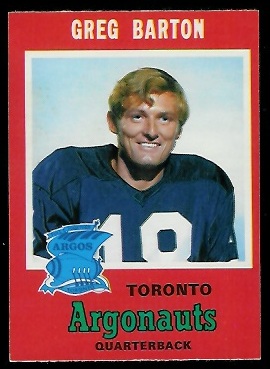
#228 Pete Liske - After using QB Norm Snead from 1964 to 1970 with little success, the Eagles dumped him after the 1970 season, before another starting QB was acquired. Their brilliant plan was to acquire Greg Barton, the Lions' 3rd-string taxi-squad QB, whose entire NFL career consisted of 1 attempt in 1969. If you think that's laughable, get this: After the Eagles acquired him for 3 draft picks ( two 2nds and a 3rd), Barton (a taxi-squadder, mind you) chose to play in Canada rather than accept a starting NFL QB opportunity with the Eagles!

The Eagles' Plan C turned out to be a hastily-arranged deal with the Broncos for Pete Liske, the former Penn State and CFL quarterback. Liske would last for a year and a half, before being replaced midway through the 1972 season by rookie John Reaves. In 1973, the Eagles finally put an end to their QB shenanigans by acquiring Roman Gabriel from the Rams.


#146 Harold Jackson - Jackson was one of the few bright spots on the Eagles' roster. A rookie with the Rams in 1968, Harold was a star for the Eagles from 1969-1972, leading the NFL in receiving yards in 1969 and 1972. Jackson returned to the Rams for the 1973-77 seasons. He also started for the Patriots from 1978-81, before finishing his career as a backup with the Vikings (1982) and Seahawks (1983).

#21 Steve Zabel - Zabel was the Eagles' #1 pick (6th overall) in the 1970 draft. After a rookie season at tight end, he switched to outside linebacker during 1971 and remained there for the rest of his career. After 5 seasons with the Eagles and 4 with the Patriots, Steve finished his career with the Colts in 1979. Nice stache!


#102 Mark Nordquist - Just like with Zabel's card, Topps has the wrong position on this card. Nordquist was primarily a guard, although he filled in at center from time-to-time due to injuries. This is an older picture, showing Mark in a late-1960's Eagles jersey. He played for the Eagles from 1968-74, and the Bears from 1975-76.


#73 Henry Allison - Allison was the Eagles' 2nd-round pick in the 1971 draft, and was generally a bust. He played all of 1971 and part of 1972 with the Eagles, then was with the Cardinals from 1975-77.


#175 Tom Dempsey - Dempsey joined the Eagles midway through the 1971 season, and stayed through the 1974 season. He also kicked for the Saints, Rams, Oilers, and Bills in a career that lasted from 1969-1979.

#201 Leroy Keyes - In 1968, the Eagles ran their record to 0-11 before foolishly winning 2 of their last 3 games, to finish at 2-12. Since this was slightly better than the Buffalo Bills' 1-12-1 record, Buffalo got the #1 draft pick (O J Simpson) and the Eagles (tied with Atlanta at 2-12) settled for the #3 pick. For some reason they chose Leroy Keyes, a running back from Purdue. (Immediately following this pick, the Steelers chose DT Joe Greene at #4, followed by the Bengals taking QB Greg Cook at #5.) For 2 seasons, Keyes was a bust at running back, then switched to strong safety in 1971, where he was marginally better. After 1972, he was shipped off to Kansas City for his final season.

Since the early 1970s, anytime I hear Leroy Keyes name mentioned, I immediately have the same 2 thoughts:
1) The Eagles had Leroy KEYES, not Leroy KELLY!
2) The Eagles had Leroy Keyes, not O J Simpson!


#45 Bill Bradley - Bradley was the Eagles' 3rd-round pick in 1969, and was their starting free safety from 1971 to 1976. One of the Eagles' few stars on defense, he was also their punter from 1969-70 and 1972-73, and returned punts every season. He finished his career in 1977 with the Cardinals.


#314 Tom McNeill - Here we see Tom in an airbrushed jersey. McNeill was the Eagles' full-time punter in 1971 and 1973, and appeared in a few games in 1972. He also punted for the Saints and Vikings from 1967-70.


#286 Bill Bradley All-Pro - Here is an All-Pro card for the Eagles. Each team's All-Pro cards were issued as part of the rare 3rd series.


Also check out the 1967 and 1971 Eagles.


Coming March 20th: Cleveland Browns
.